How to Get Business as an Instagram Influencer: A UK Guide to Brand Deals
How to get business as an Instagram influencer: what brands check, Creator Marketplace, a pitch template, pricing, and the UK ad and tax rules for 2026.
In this article
Quick answer: How to get business as an Instagram influencer: pick a niche brands sell into, switch to a creator account, join Instagram's Creator Marketplace, and pitch brands directly with a one-page media kit. Price from your own reach, label every paid post "Ad", and tell HMRC once income, including gifts, passes £1,000.
You post consistently and your audience trusts you, yet the brand inbox stays empty while smaller accounts in your niche tag paid partners every month. The gap is rarely talent. Brands pay creators who are easy to find, easy to say yes to and safe to work with under UK ad rules, and most creators only fix the first of those. This guide covers all three, with a pitch template, a pricing method and the 2026 rule changes.
What brands check before they reply
A brand's marketer decides in about the time it takes to scroll your grid once, so your profile has to answer their questions before they ask. The same few checks come up again and again.
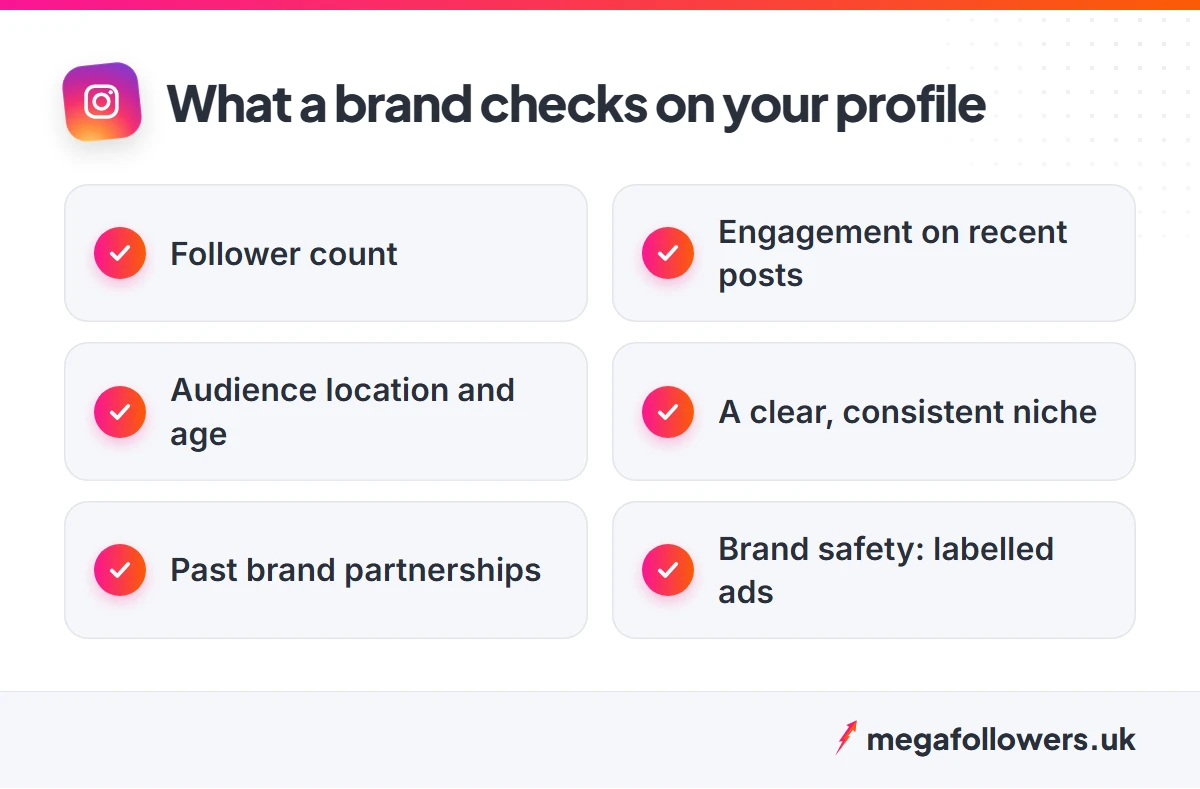
- Follower count: usually the first filter a brand applies when it searches for creators.
- Engagement on recent posts: likes, comments and Reel views on your last nine posts, compared with your follower count.
- Audience location and age: a UK skincare brand wants UK buyers, and your insights screenshot proves it.
- Niche consistency: a grid about running shoes sells running shoes. A grid about everything sells nothing in particular.
- Past brand work: tagged partnerships show you can deliver on a brief.
- Brand safety: no hidden ads, no fights in the comments, no reposted content.
Notice that four of the six are numbers a marketer reads in seconds. Creators tend to obsess over the aesthetic while the brand looks at the counts first. Fix the numbers, then polish the look.
Run the same check on yourself before any brand does. Open your insights, screenshot the last 30 days of reach and audience, and work out your engagement rate on your last 10 posts: likes plus comments, divided by followers, times 100.
Write that figure down. Then write it again next month. It becomes the headline number in your media kit, and you'll want to watch whether it rises or falls as your following grows. A brand that sees you tracking it assumes you'll track their campaign just as closely.
How to get business as an Instagram influencer in 7 steps
The fastest route runs in order: niche, account setup, marketplace, media kit, pitch, price, delivery. Skip a step and the one after it gets harder.
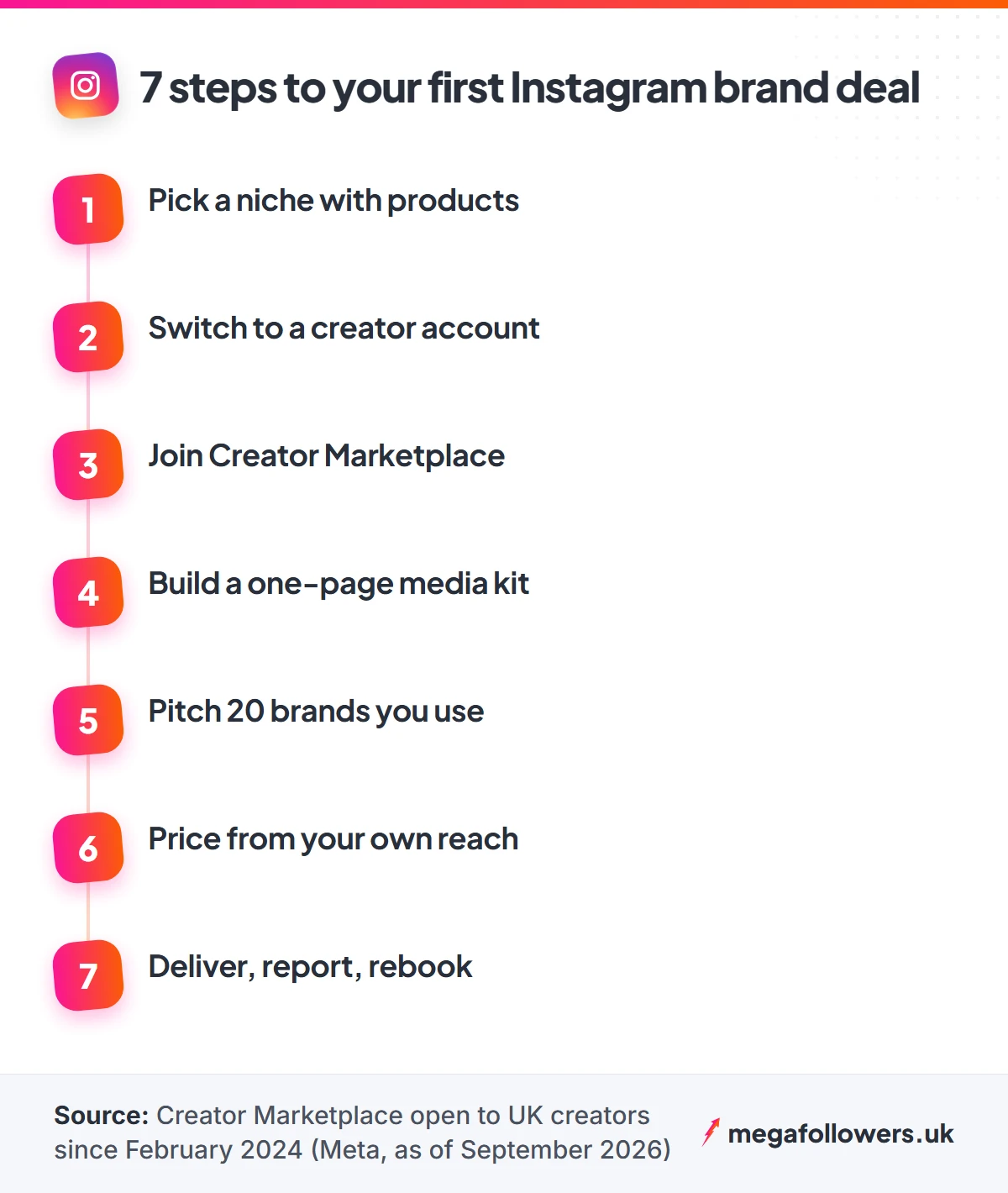
1. Pick a niche a brand can buy into
Choose a topic with products attached. Home fitness, budget travel, skincare and pet care all have hundreds of UK brands with marketing budgets. "My life" has none.
Narrow it one level further than feels comfortable. "Vegan baking in small kitchens" beats "food" because a brand knows exactly which buyers you reach.
2. Switch to a creator account and fix your bio
A creator account gives you insights, the professional dashboard and Instagram's branded content tools. Switch in Settings and activity, under Account type and tools.
Then rewrite your bio for a stranger with a budget. Say what you post, who it's for and where you're based, and add a business email. Brands in London won't dig through your DMs to find a contact.
3. Join Instagram's Creator Marketplace
Creator Marketplace is Instagram's own matching tool, and UK creators have had access since Meta's February 2024 expansion to seven new countries. You join from your professional dashboard. There you list the brands and interests you care about and build a portfolio of past work.
Brand messages land in a Partnership Messages folder at the top of your Primary inbox, so they don't sink among fan DMs. Check it weekly. Any brand offer that sits unread for a fortnight usually goes to the next creator on the list.
4. Build a one-page media kit
Your media kit is a single PDF or page that answers every question a brand would otherwise email you about. Keep it to one screen on a phone.
| Section | What to include | Where the number comes from |
|---|---|---|
| Who you are | One line on your niche and location | You |
| Audience | Followers, top countries and cities, age range | Instagram insights, last 30 days |
| Performance | Average Reel views, likes and comments per post | Insights, averaged over your last 10 posts |
| Past work | 2-3 brands with a result each | Your own campaign reports |
| Formats | Reels, carousels, Stories, Lives | You |
| Contact | Business email and response time | You |
Update it monthly. Numbers from last spring tells a brand you're not paying attention.
5. Pitch brands directly
Don't wait for Marketplace offers alone. Make a list of 20 brands you already use, find the marketing or partnerships contact, and send a short email:
- Subject: "Reel idea for [product] from a UK [niche] creator"
- Line 1: why you picked them (you buy their product, say which one)
- Line 2: your audience in one sentence with one number
- Line 3: one concrete content idea, built around their newest launch
- Close: media kit attached, "happy to share rates for a brief"
Follow up once after a week. Then move on, because silence is an answer too.
6. Price the deal from your own numbers
Benchmark rate tables online rarely show a source, so build your price from your own reach instead. Start with your average Reel views, choose a base rate per 1,000 views, then add fees for extras.
For example, a creator averaging 12,000 Reel views who sets a £15 base per 1,000 views would quote £180 for one Reel. Usage rights (the brand running your video as an ad) and exclusivity (not working with rivals for a set period) each justify a separate fee on top. Those figures only show the maths; your base rate should reflect your niche and results.
7. Deliver, report and ask for the next one
Post on the agreed date, then send a short report within a week: reach, views, saves, link clicks and a screenshot. Most creators never send one.
That report turns a one-off into a repeat booking. End it by suggesting the next campaign, while the results are fresh.
Label it right: the UK ad rules brands expect you to know
Every paid post needs a clear "Ad" label at the start. The ASA can rule against both the brand and the creator, so careful brands check your past labelling before they sign. Its advice on recognising ads on social media, updated on 6 August 2026, expects a prominent label upfront, and it names "Ad" as the most appropriate word.
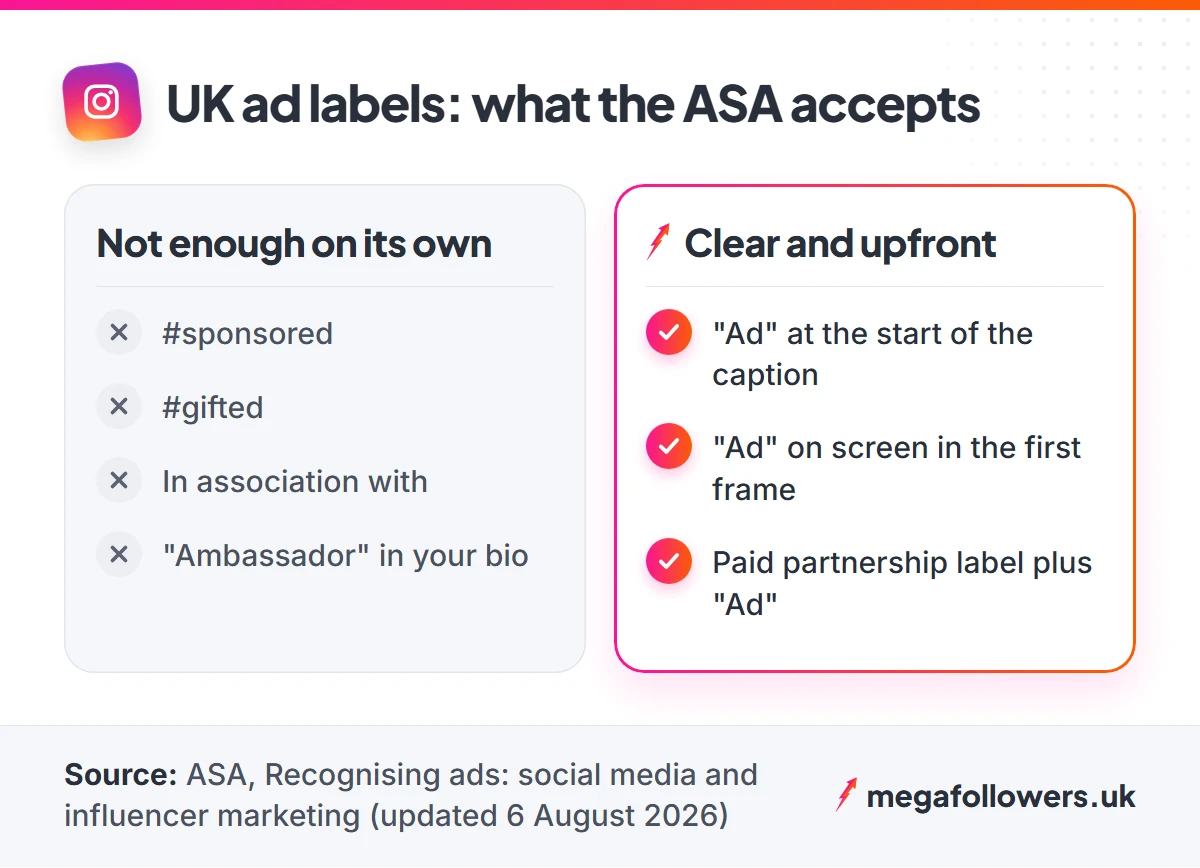
What most guides get wrong: "#sponsored", "#gifted" and "in association with" are not enough on their own, according to the ASA. Instagram's Paid partnership label may work if it is upfront and clear, but the ASA's 2026 research found it may not be enough by itself. Use the label and write "Ad" at the start of the caption.
Placement matters as much as wording. On a Reel, put "Ad" at the start of the caption and on screen in the first frame; on Stories, add it to every frame, because viewers can tap straight past the first one. Three more rules trip up new influencers:
- Affiliate links count as ads. Any post about a product with your affiliate link or code needs the label.
- Your bio doesn't cover your posts. "Brand ambassador" in your bio won't help, because each post appears alone in someone's feed.
- Size gives no exemption. The CMA's guidance for content creators, last updated in September 2025, applies to any direct business connection with a brand, including free or discounted products, whatever your follower count.
Instagram's own branded content rules point the same way: add the Paid partnership label whenever you receive money or products for a post. Get this right from your first deal. The ASA has published the names of influencers who repeatedly failed to label ads, and no brand wants its logo next to that list.
Gifts, fees and HMRC
Gifted products count as income for UK tax. HMRC values each one at what it would have cost you to buy. For example, a £300 jacket sent for a try-on haul counts as £300 of income, even if you never wanted it and gave it away the following week. That rule comes straight from its guidance on income from online platforms, updated in February 2025.
The trading allowance covers the first £1,000 of trading income in each tax year, which runs from 6 April to 5 April. Above that, register for Self Assessment. The figure counts everything together, from fees and affiliate commission to the value of gifts, so a creator paid £600 in fees who also received a £500 camera has crossed the line.
Keep a simple log from your first deal: date, brand, cash received, value of any product. It takes two minutes per deal. January gets much calmer.
One more choice is worth knowing early, because it changes how much tax you pay. You can use the £1,000 allowance or deduct your real costs, such as a camera, lighting or editing software, but not both. Once your spending on kit climbs past £1,000 a year, claiming expenses usually works out better, and that's the point to speak to an accountant.
Where paid growth fits in a brand-ready profile
Brands filter by numbers first, which is why paid growth has a real place in a creator's plan. It speeds up the stage most creators find slowest of all: getting from unknown to credible. A modest boost to your Instagram followers lifts the first number a marketer sees, and it helps you clear the audience-size filters brands set in their searches.
Location matters just as much. UK campaigns go to UK audiences. If you pitch British brands, UK Instagram followers keep your audience weighted towards the country your partners sell in.
Keep the ratios believable. Any experienced marketer notices a jump in followers with flat engagement, so pair growth with Instagram likes on your showcase posts and Instagram Reel views on the Reels you link in your media kit. Some Instagram comments on a launch post start the conversation that your followers then join.
Timing helps too. Order a few weeks before you send a round of pitches and choose gradual delivery, so your growth curve looks steady by the time a brand opens your insights screenshot. Then keep posting on schedule. Paid growth works best as the base layer under content that already fits your niche and audience.
Brands pick proof. Proof starts on your grid.
Everything above comes back to proof: a profile that looks established, numbers that hold up in a media kit, and posts labelled the way UK rules require. Build all three and the pitch almost writes itself. Skip one and even a great content idea stalls at the brand's first check.
Start with the step you're weakest on this week. For most creators that's the pitch list, so open a note now and write down the first five brands you already buy from.
Every Mega Followers order comes from real-looking accounts, needs no password, and carries our 30-day refill guarantee. Posting times matter too, and our guide to the best time to post on Instagram shows when UK audiences scroll. Order questions go to our help and FAQs page.
Frequently asked questions
Is there a follower minimum for Instagram brand deals?
No official one exists. Instagram doesn't set one for branded content, and small brands regularly work with creators under 10,000 followers when the niche fits. Bigger brands often filter by audience size, though, so a higher count widens the pool of brands that will consider you.
Do I need a business account or a creator account?
Most influencers should pick a creator account. It gives you insights, the professional dashboard, Creator Marketplace and the branded content tools, plus flexible contact options. Business accounts suit shops and service providers selling their own products. You can switch between the two in Settings whenever your plans change.
Should I accept gifted products instead of payment?
Early on, a gifted deal can build your portfolio, but treat it as paid work. The post still needs an "Ad" label if the brand controls it, and HMRC counts the product's value as income. Ask for a fee once you have two or three finished campaigns to show.
How do I find a brand's contact details?
Start with the brand's own website: look for press, partnerships or affiliate pages, which often list an email. Their Instagram bio may include a business contact button. If both fail, a short, polite DM asking for the right email usually works better than pitching in the DM itself.
What should an influencer contract include?
Your contract should list the deliverables, posting dates, fee, payment terms, usage rights, exclusivity period and approval process. It should also state who handles the ad label. Get it in writing, even by email, before you film anything, and have a solicitor check any long exclusivity or perpetual usage clause.
Can I work with brands if I'm under 18?
Yes, but with extra care. Instagram requires account holders to be at least 13, and a parent or guardian usually needs to agree to any contract, because minors in the UK have limited power to sign binding deals. Brands selling age-restricted products such as alcohol or gambling must not use under-18 creators.